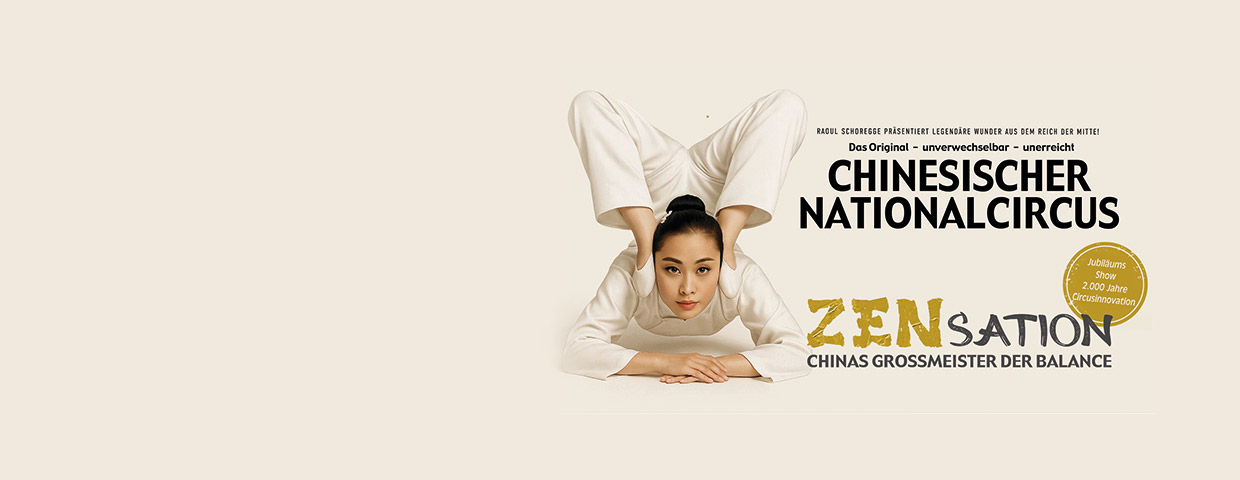
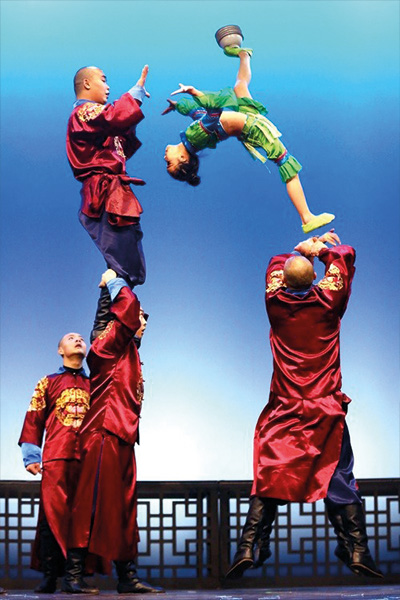
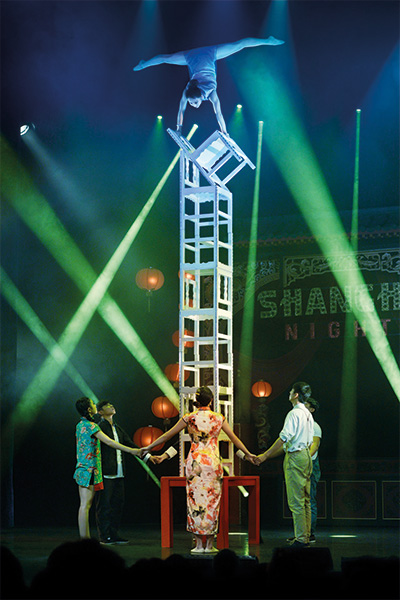
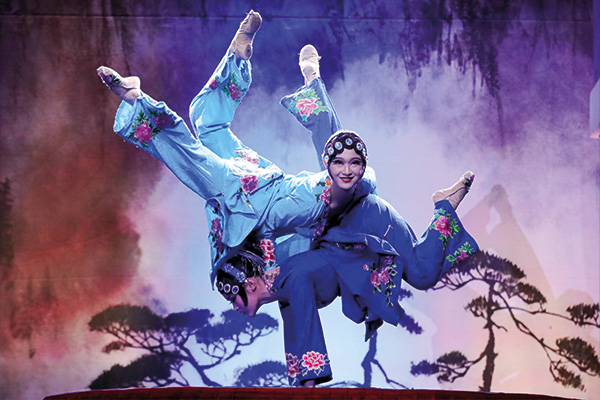
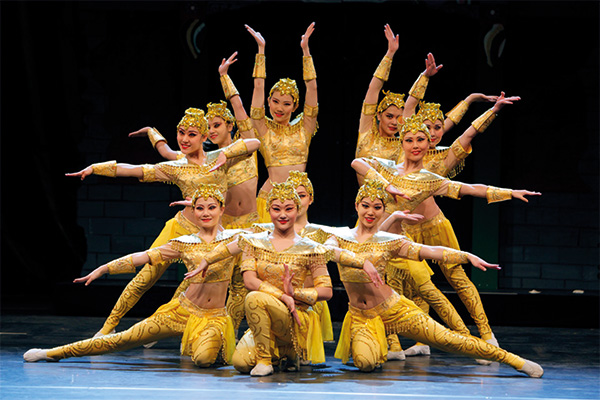
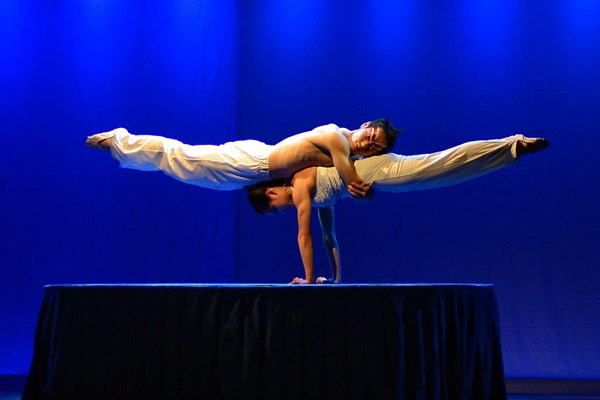
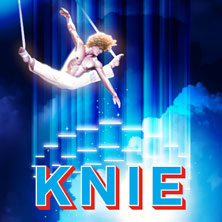
For decades, the Chinese National Circus has been thrilling international audiences with breathtaking productions of the unity of body, mind and soul. This traditional form of acrobatics, called "zaji", enables the artists to perform almost unbelievable feats.
The Chinese National Circus builds bridges between worlds
The ambition of the Chinese National Circus and the European-Asian production team behind it is to build a bridge between our different worlds. China's culture, which is over two thousand years old, is multifaceted, sometimes mystical for Europeans - and fascinating in any case. Each tour of the Chinese National Circus, which has been travelling through Europe with ever new programmes for more than three decades, takes the visitors into another world.
A Chinese circus is basically designed as a so-called "peep-box stage", i.e. with only one side open to the audience and aisles or side stairways like in classical theatre, ballet or opera. In the 1990s, the Chinese National Circus performed its tours almost exclusively in tents, but soon returned to familiar stages and popular halls.
The magic of China, presented in shows full of variations
Chinese martial monks can unleash almost unbelievable powers through hard training and meditation. The Circus artists, who strive for perfection, also work according to these traditional methods known as "zaji". For each tour of the Chinese National Circus, a completely new concept is created under a specific theme.
The aim of the creators is always to bring the magic of China to the audience, but also the unique spirit that distinguishes the performers. When the acrobats, thanks to their physical and mental strength, perform numbers that seem to go beyond the humanly possible, the spectators regularly take their breath away.
In 2000, Raoul Schoregge and his team took over the production from predecessor André Heller. The first shows of the Chinese National Circus after the turn of the millennium thrilled European audiences above all with extraordinary acrobatic top performances. After a change of concept, the artists convey more about the history and culture of China.
The titles of the various shows refer to the respective thematic focus. For example, "Genghis Khan" highlights the Mongolian influences in China. "The Last Emperor" deals with the end of the empire. "Mulan" tells the story of a legendary heroine. With programmes such as "Silk Road", "Shanghai Nights" and "Chinatown", the shows of the Chinese National Circus also repeatedly address the connections between Europe and China.
The Chinese National Circus: A fascinating event for the whole family
This kind of circus art does without clowns and predator shows at all. The focus is on a story, illustrated with the means of acrobatics, framed by carefully coordinated stage elements, atmospheric light productions and varied music. This unique blend of culture, poetry, acrobatics, grace and power will thrill audiences young and old alike.
Whoever has tickets for the Chinese National Circus travels to the mystical Middle Kingdom without a plane. Over the years, the circus has attracted more than ten million visitors. The artists are among the best in their field internationally. They are trained in the approximately 1,000 circus schools that exist in the People's Republic of China. Committed to tradition, yet looking to the future: This is exactly how the productions of the Chinese National Circus are presented.