Musicals and Shows

Martin Rütter: "No dog is born bad"

22/01/2019 written by Sidonia Maurer
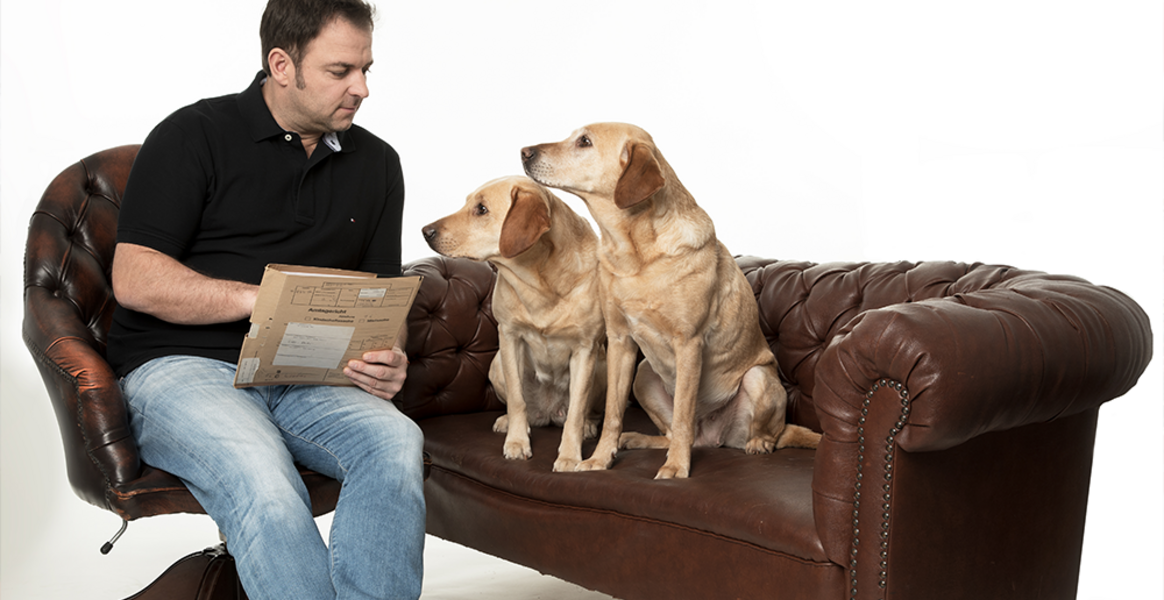
The German Martin Rütter has been mediating between dogs and their owners for over 20 years. With his new program "Freispruch", Rütter wants to show in an entertaining way that dog owners themselves are responsible for problems with their dogs.

event: Martin Rütter, what is your program "Freispruch" about?
Martin Rütter: First and foremost, it's always about education: the problem is really never the dog, but always the person. To solve this, they have to change their attitudes and behavior. I will speak as an advocate for the dogs. It should be fun. But it's also about holding the mirror of truth up to the viewers' faces.

What convinced you that the dog is not at fault?
The dog usually lacks the irreplaceable factors in dog training: consistency and discipline. Firm rules are needed that both must adhere to. If the dog is allowed on the couch one day but not the next, this confuses him and is counterproductive. The human has the authority to decide. This in turn creates trust in the dog.

Are there also dogs that are evil by nature and therefore don't deserve to be "acquitted"?
No. Dogs are not born evil. There are certainly typical character traits in dogs. But 99.9 percent of the problems that arise in the course of dog training are man-made.

We keep hearing about tragic incidents involving fighting dogs. Are there dog breeds that should be banned?
Whether a dog is friendly, fearful or aggressive depends above all on how it has grown up and what experiences it has had in its life. The upbringing by the mother dog and the breeding by the breeder play just as big a role as the life of the owner. Of course, there are also genetic and breed-specific phenomena that should not be ignored. But the blanket classification of fighting dogs using so-called breed lists is absurd and misses the core problem.

How can such incidents be prevented?
A large number of incidents could certainly be prevented if there were
a mandatory dog license that had to be obtained before a dog was purchased. After all, almost all behavioral problems are acquired and result from human misconduct. There is a lack of information - theory lessons before buying a dog would prevent most problems.

You have been mediating between dogs and their owners for over 20 years. What has changed?
Today, dogs are doing better with people than ever before. The idea that dogs are part of society and an important part of the family is becoming more and more firmly established. Its needs are recognized and satisfied. Of course, some people then overdo it with the benevolence, which often spills over into humanization. This has increased significantly in recent years.

What is meant by humanization?
A dog cannot think and act like a human. If the dog wears a diamond on its collar, this is not a problem because it is not restricted in its mental and physical freedom. But it mustn't escalate, otherwise we quickly end up with
cruelty to animals.

What is the biggest or most common mistake that people make when dealing with dogs?
There are three cardinal mistakes: the humanization I just described, a lack of consistency - if the dog is allowed to sit at the breakfast table on Sundays and get its liverwurst sandwich, but not on other days, it won't understand. It just makes him insecure. The third mistake is a lack of activity. Dogs need physical and mental exercise.

Is it true that dogs and dog owners are often the same - and if so, why?
You can sometimes recognize a similarity in character or behaviour. My first dog Mina, for example, got smarter and smarter over time. My children used to say: she's also getting more greedy (laughs).

Martin Rütter "Acquittal"
29.01. - 17.03.2019, Basel, St. Gallen, Bern, Lucerne
TICKETS

Translated with DeepL