Music

Yello: Home game after 39 years

13/06/2017 written by Christoph Soltmannowski
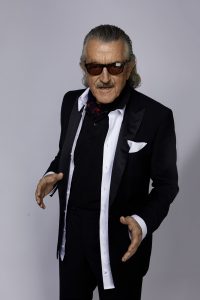
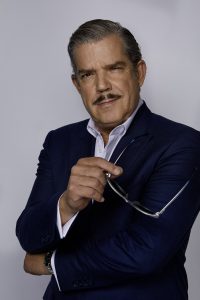
Dieter Meier and Boris Blank first performed live with Yello in Zurich. Back then as an unknown avant-garde band in a small movie theater. They have been successful worldwide for almost four decades - and are now venturing onto the Hallenstadion stage.

It was on September 18, 1978 in the Forum cinema on Langstrasse, where a few performers appeared at a fashion show - including the three musicians Dieter Meier, Boris Blank and Carlos Péron. That was almost 39 years ago, and since then Yello have never again been seen live on stage in their home town of Zurich. Dieter Meier and Boris Blank only return to the stage in November - at the Hallenstadion.

Today, Yello are known all over the world. Their songs are more than hits - "Oh Yeah" and "bount bount...chickachicka" are familiar from movie soundtracks and commercials, the song "The Race" is the standard background music for every car racing feature. Boris Blank's unusual sounds and rhythms, Dieter Meier's sonorous spoken vocals - the two have made pop history. With 13 successful albums and over 12 million records, the duo is one of the most successful Swiss artists according to the Suisa collecting society.


Oh Yeah! One of their best-known songs

Actually, the two of them could have retired long ago. Boris also celebrated his 65th birthday in March, released an extensive solo album and developed a music studio for your pocket with the Yellofier app.

But now the two have set themselves a new challenge - and ushered in a whole new Yello era:

Years of constant and repeated requests from countless interviewers have apparently had an effect. So far, they have mainly presented themselves visually with spectacular, colorful and somewhat surreal video clips from Meier's kitchen, who is also a director and has also maintained a residence and studio in Hollywood for almost twenty years.

After the legendary performance in the long-closed Forum cinema, the two Yellos were hardly ever seen live again - apart from a performance at the Roxy in New York in 1983, at the World Music Awards in Monte Carlo in 1990 and at a rave in Dortmund in 1995. Conclusion: Yello concerts were rarer than solar eclipses.

That's why it came as a great surprise when Yello played four live concerts with a dozen accompanying musicians at the Kraftwerk in Berlin last year. A proper tour is now to follow in November: Concerts in large halls in Frankfurt, Hamburg, Munich, Vienna, Stuttgart and Cologne - and also in Zurich.

Yello will also be performing at the Montreux Jazz Festival in the "Lab" on July 12 - another eagerly awaited appearance.

The two welcome us to Dieter Meier's villa, where the Yello studio is located in the basement. Boris Blank has been busy for weeks preparing more Yello hits for the stage performance. A software problem is giving him a headache and he phones the support team. We decide to talk to Dieter Meier first, who welcomes us upstairs in the fireplace living room with its cozy sofa - and then talk to Boris. Here we go!


2016 at Kraftwerk Berlin: Yello improvise with the Yellofier app

Dieter Meier:"I hummed rhythmically because I couldn't do anything else."


If you only have to know one person in Zurich, it's Dieter Meier, writes Alexander Graf von Schönburg in his book "Smalltalk". The 72-year-old Yello singer is also a performance artist, actor, director, author and entrepreneur: he produces wine and meat - and soon wants to revolutionize chocolate production.

event: Dieter, you've only ever played live with Yello once before in Zurich - that was almost 39 years ago. What was it like back then?

Dieter Meier: It was our first concert ever. Together with other artists, I had been invited to perform at a multimedia show. I spontaneously decided to do it together with Boris - but he didn't want to perform live. There was an orchestra pit in the Forum cinema and we agreed on the compromise that Boris would stay in the pit so that he wouldn't be seen. People were completely surprised - there was a good response. And so Boris suddenly emerged from the orchestra pit. He appeared like Neptune. At first you could only see his hair and then his whole head. That was actually the birth of Yello.

Later, in 1983, you performed in the New York scene club Roxy.

Everyone was checked for weapons at the entrance. There were already 30 guns and 60 knives in the checkroom, and Boris said: "We're not going in there, it's life-threatening." The audience, mostly African-Americans, had assumed that we were two black avant-garde musicians from the West Coast. But then there were these two white guys from Switzerland.

How do you explain your success?

Boris is a natural born musician, making music is his life, for me it was more of a game. I wasn't as serious about it as Boris. He would have made music even if he had never sold a record. For Boris, music is oxygen. When we met, he had a whole suitcase full of cassettes. When I was allowed to listen to them, I felt like a treasure hunter who had the luck of his life.

So the success came as a surprise?

Absolutely, our songs weren't mainstream and certainly not radio-friendly. Because we were dilettantes, we never ran the risk of adapting to trends because we simply couldn't do it. I'm often asked by young musicians how we managed that: there are two completely different ways. One is radical opportunism, but if it doesn't work, you're like a prostitute who does everything for a career and doesn't even get paid in the end. The other way is the opposite: you find and invent yourself in your music,

... which you have succeeded in doing!

You can recognize a Yello song after 30 seconds. My humming is an identity. Neither of us had any musical training. In music schools and conservatories you learn to move within existing forms and you might achieve great virtuosity. But then it's difficult to unearth your uniqueness behind the professional skills.

Then you actually invented rap.

I hummed rhythmically because I couldn't do anything else. The parallels to rap are pure coincidence.

Is it special for you to be performing in Zurich?

Boris and Dieterchen, in front of our own audience in an ice hockey stadium, we would never have dreamed of that.

Before that, you're playing at the Montreux Jazz Festival in July. Will you be putting on the same show at the much smaller Lab?

We'll adapt it somehow, but maybe it will be a bit more improvised. Boris invented the Yellofier app. We can use it to create a whole song live. I still have to convince Boris of the idea, he's a perfectionist - it could go down the drain. But that doesn't matter. People have fun when a piece of music is created out of nothing, unplugged & unrehearsed with clapping, snapping and snapping.

Boris Blank: "I work on 70 songs at the same time."

Boris Leibovich Blank (65) used to work as a truck driver so that he coulddevote himself to his sound experiments. He spends most of his time in the studio, tinkering with new sounds on a daily basis. His Yellofier app is a music studio for your pocket. His solo album "Electrified" was released in 2014. He can't read music, by the way.

event.: It's been almost 39 years since you last performed together in Zurich.

Boris Blank: If someone had said to me, Boris, you're going to be live with Dieter in 2017, I would have said: "You're crazy, I can't imagine that."

Is the preparation time-consuming?

Yes, I worked for seven months just for the concerts in Berlin. Now we want to prepare even more Yello hits for the live performance. We don't want to do it like other bands, where everything comes from the tape and the artists just move around a bit, but really play live. For some songs that's not possible, I need a certain basis from the computer. But most of it is actually live - about 14 musicians took part in Berlin.

Is it true that you've been collecting sounds for 40 years?

Yes, I was already a sound hunter back then and put together a large sound library that still exists today.

Do you still use the sounds from back then?

Yes, I recycle them and process them with the latest technology, which gives me the opportunity to look at an apparent surface under a microscope, so to speak, and then immerse myself in the molecular structure. This also works with the Yellofier, my app.

How did the app come about?

The basic idea came from me - I realized it together with the Swedish crack Håkan Lidbo. When he visited me in Zurich, I told him it would be cool to have a step sequencer where you could assign an effect to every single step. We then made sketches on the table. After two weeks, he had found someone who could program it. After a few test versions, the app was ready.

And now you're also using the app live?

Yes, I did a song live in Berlin. I was against it at first, but people are really into it.

Do you work fixed hours here in the studio every day?

Yes, I also take a lunch break every day at 12 to 1 pm.

Like a civil servant!

Yes, I need that, the regularity gives me freedom. When it's my turn, I have my universe. I'm like a cloistered monk who celebrates this. It's like meditation, regularity, just like a civil servant!

And when you're in a bad mood?

I never am. I'm a pretty even-tempered person. Sometimes there are moods when I'm a bit more melancholy.

Do you notice that in your music?

I think so. There are a lot of pieces where I paint pictures. At the moment I'm working on 70 songs at the same time, so I'm always doing one thing and then another. Depending on the mood, I paint a picture that I continue to work on.

How did the audience react in Berlin?

The first evening in Berlin was a bit stiff. There was mainly invited press there. But the other concerts were attended by Yello fans from all over the world, people from Australia and New Zealand, Norway and the USA and so on. It really is the same as I've often heard from live musicians. The immediate feedback from the audience is totally euphoric.


Limbo - Yello's latest video

YELLO
30.11.2017 Hallenstadion Zurich
12.07.2017 Montreux Jazz Festival
TICKETS

Translated with DeepL