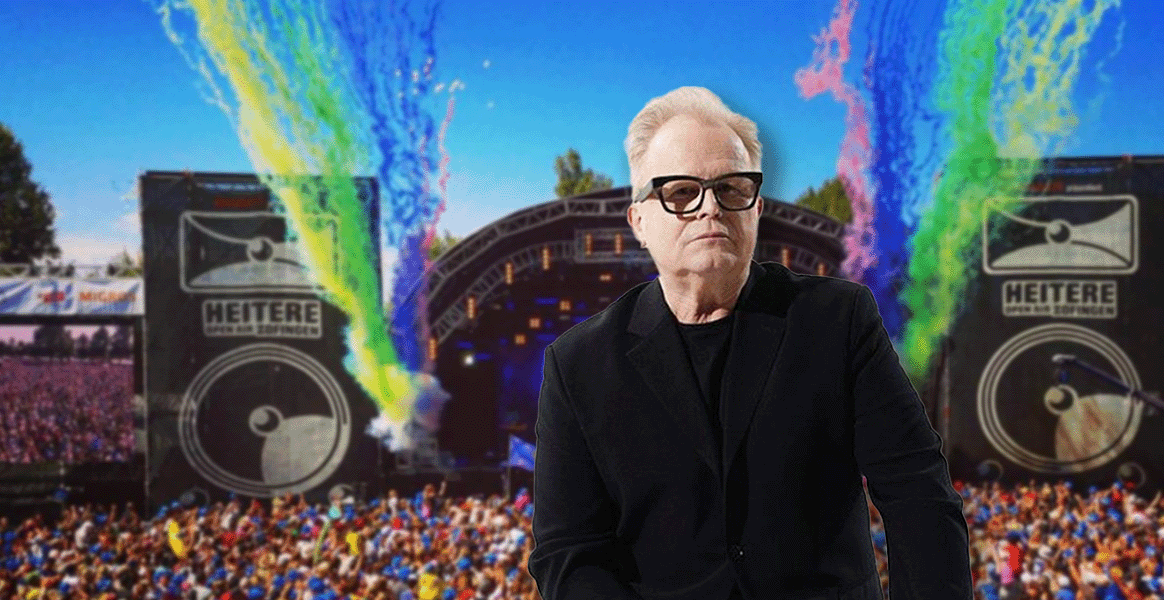
It was April 1988 when Herbert Grönemeyer last performed in Zofingen, back then in the venerable multi-purpose hall. He returns in summer 2024, this time to the Heitere square: Herbert Grönemeyer opens the Heitere events week on Zofingen's local mountain with his concert on "Super Tuesday" on August 6.
"That's what's going on!" This is the title of his sixteenth studio album, which was released in March 2023. We met Herbert Grönemeyer for an interview last year - see further down in this article.
On Wednesday, August 7, the "Music History Live" theme continues with the "Magic Night", featuring rock legends Status Quo, the Pink Floyd tribute band Crazy Diamond and the resurrected Plüsch.
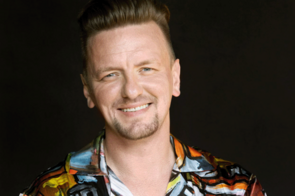
The VolksSchlager Open Air follows the next day, on Thursday, August 8, with the likeable Ben Zucker, the talented Daniela Alfinito and the popular Amigos .
The "regular" Heitere Open Air will then take place from August 9 to 11, 2024 and offers a wide range of musical genres, including hip-hop, pop and indie pop. The festival, which is taking place for the 33rd time, attracts around 12,000 visitors a day every year and has become a firm fixture of the Swiss festival summer since it was founded in 1991.
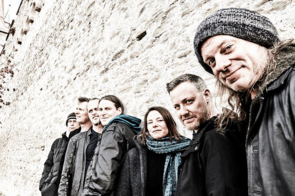
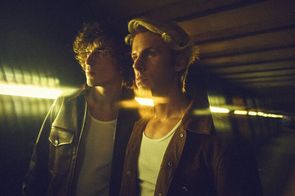
The line-up for Heitere Open Air 2024 includes 30 bands and artists, including some of the best-known names on the music scene:
Other confirmed acts include Cro, Badmómzjay, Dean Lewis, Jeremias, Stress and many more.
Last year, shortly after the release of his latest album "Das ist los", we met Herbert Grönemeyer for a chat.
A conversation about music, Switzerland and the strength that can be drawn from unrest. Here is an excerpt from the video conversation in text form.
event..: A lot has happened in the world since we last met four years ago.
That's true! My last record was called "Tumult" - and a lot has changed since then. The pandemic has got us all pretty excited, we're scared and highly nervous. I've lost two friends to corona. We've almost forgotten what happened. And that's a good thing. Fortunately, people are also able to encapsulate things and push them away. When I started working on the new album in 2021, I was skeptical. It was special to write music in these times. I also had respect for the lyrics - but I also have that in general.
But your new album "Das ist los" is not at all lethargic or melancholy, rather optimistic, even cheerful.
Well, it's not the time to be cheerful. But in times of crisis, we humans look for things that strengthen us - or at least help us in such moments. In my most difficult times, music has helped me to breathe again and again. Or, as Leonard Cohen once said, "to flush the brain".
Your current single is called "Angstfrei". The lyrics are very successful - as is the video. Can you really be free of fear?
If you listen to the lyrics carefully, I'm not advocating freedom from fear. Fear is an important guide. But you shouldn't remain in fear. Especially in times like these, you only feel life when you set out. Many people find this difficult - which is why this is not a gymnastics guide. There are many people who are socially, mentally and financially overwhelmed. Conversely, the people who can should try to find ways to work out anxiety-free moments and not let themselves be beaten down.
You rented a house in Umbria for the album production. Was that also a bit of a vacation - or more exhausting like a boot camp?
We had a beautiful view over the valley from the house in Umbria. You could see as far as the eye could see. There was also a swimming pool, but we only went in once. It was more like a boot camp. There's a lot of pressure - and anxiety too: will we come up with something or not? How will we start a new record? Will we get any further? We really sat on top of each other and got into each other's hair at times.
Why?
Mood and pressure. Different tastes. I'm a cheerful morning grouch. Not so Alex. I annoyed him early on with my chatter. In the evening, we had a wonderful time together and had a drink. You're attached to each other, but at the same time the clock is ticking because you want to go home with a result. Fortunately, the start was good. And it quickly set the tone for the album.
Does the environment have an influence on the music?
Massively! You go somewhere and get inexplicable impulses. For me, a room also determines the music. I also reflect the soul of a room in the music.
Is that only the case when writing songs, or do you also get impulses when you go to Switzerland, like now?
In general, I really enjoy coming to Switzerland. Now, when I'm doing promotion, it's the conversations. The way people talk to each other here.
Different from Germany?
Completely different. What I've always liked about the Swiss people is their self-irony, their quiet humor, which always resonates. This mischievousness and looking into faces that have a calmness and at the same time always break out so suddenly. The conversations are different, and at the same time I'm glad that I can still come to Switzerland to talk about my records. I lived in Zurich for a while. I was with a Swiss woman for a long time - and I really like being here, I have friends here.
Some people are currently accusing the Swiss of hiding behind their neutrality because of Ukraine. How do you see that?
It would be an exaggeration if I were to presume to say how to deal with it in Switzerland. I think that's tricky. I'm sure that we have to show Mr. Putin that the world is united - and the more united, the more stable. That he can't divide the world the way he wants to. I think standing together symbolically is a very good thing. The extent to which this has to do with how many weapons are supplied and whether this is the only way forward is a complex debate.
Without making a big deal of it, you're getting involved and sending trucks full of relief supplies to Ukraine with friends, among other things. Do you believe that music alone can make the world a better place?
We artists can drum for things. Music is at least there to make sure the world doesn't get any worse. But you can support people who are politically active or involved in aid organizations in their work. Culture can also mess with governments, as you can see with the rappers in Iran who provoke the regime. German reunification was also brought about by people from the cultural scene. I don't take myself too seriously, but I would say that you are a small building block in a movement.
I know that you first create the music and then the lyrics. Does the music already tell you what the lyrics are about?
The music only tells me what mood the lyrics should be in. You can approach any topic in different ways: cynical, quick-tempered, angry or cheerful. My music then tells me whether the lyrics are right or not. I don't always notice it, but I usually do.
There are many gems in your lyrics. For example the line "Dance about it".
I have to give the authors credit for that. I read it on a shutter in a disco in Flensburg. Years ago, when we were passing by on the bus. I thought it was good because it has both: Dancing can stop you from thinking - and when you've danced, you might think about things differently.
That's also good: "There's strength in restlessness".
That's from me! And it's also true. Life is generally restless. "I have everything under control" - and the next second everything is different. Now we are in turmoil. Either we capitulate to it - which I would understand - or, conversely, we have to deal with it and it will stay with us for years to come.
You're not one to rest on your laurels: the year before last, you conducted the Lucerne Symphony Orchestra.
I had only done something like that once before. In Bochum, where I come from, there is a very good symphony orchestra. I was supposed to sing in a newly opened hall, but I thought it was strange - and then they told me to conduct. So I took someone from the conservatory as a teacher. I can read scores. I then conducted Mozart's Jupiter Symphony quite well. The slow movement was quite difficult, so the concertmaster helped me a lot. Then a friend asked me if I would do the same in Lucerne.
In the beautiful KKL.
In the incredible KKL! The orchestra was incredibly enchanting and a great support. That's how I faced it. Together with the wonderful pianist Anna Vinnitskaya. Again, I sat down with my conductor teacher. And in the end I somehow mastered it again with the help of the orchestra. I'm rarely pleased with myself. But that was a very important moment in my life. And people reacted really well.
It made waves - it also attracted attention when you changed the lyrics of the song "Männer" to "Frauen" for International Women's Day a few weeks ago.
That's a hoax and it's not true! I was at a radio station in Berlin early in the morning, the day before International Women's Day. At the end of the interview, the presenter slipped me a piece of paper with his editor's lyrics and asked me if I would be kind enough to sing it, as he wanted to open his show with it tomorrow morning. It promptly ran for a day. It was nothing more than a gag, okay for the occasion.
It went down well and no one holds it against you.
But it's interesting how something like that makes waves.
"Männer" from 1984 is one of your classics. Do you prefer playing the new songs live?
The new songs are much more fun. Also to see which song manages to unfold live and carry people away. But we will also play "Tumult". Old stuff too, of course. But the new ones will set the tone.
Three years ago, you told me about a musical you were working on.
We're still in the middle of it. Sometimes things move slowly. There's a lady in New York writing a libretto at the moment. We'll see what comes of it. I'll probably do a play here in the fall. A farce by Eugène Labiche with the Berlin director Herbert Fritsch. He makes such wonderful plays. Theater Basel has invited us. But for now it's all about the new album and the tour.
In any case, you have a lot planned for the future.
Let's see how much Sturm und Drang you still have in you and what "nonsense" I still do, certainly a little less now than I used to. Of course, I try not to get completely dusty in the head and to stay cheerful and awake.
You can see that on the new album.
Thank you, I'm really looking forward to the tour and would love to come back.
Herbert Arthur Wiglev Clamor Grönemeyer (* April 12, 1956) is one of the most popular German artists. The singer, composer, actor and musician sings about taboo subjects in lyrical form. His ballads and stories often tell of Grönemeyer's experiences. His album "Mensch" (2002) sold over 3.5 million copies, making it the best-selling album in the German language. His 14th studio album "Das ist los" has just been released.