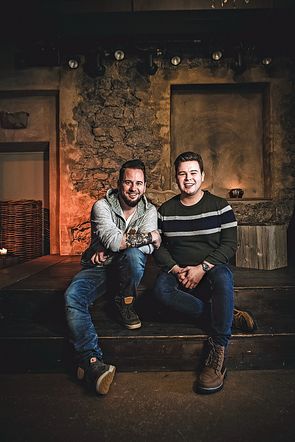
Trauffer is the man of the moment. His latest album "Heiterefahne" is now the most successful hit parade album by a Swiss artist. And yet the factory owner, dad and singer is still going strong.
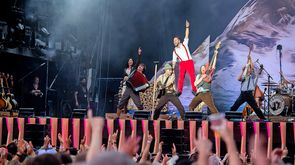
If you know the biography of Marc Trauffer (38), you might ask yourself how he does it. Not only does he run the well-known Trauffer wooden toy factory in the Bernese Oberland, he is also the father of two children and a passionate musician. However, he has said in previous interviews that music is just a hobby for him. A very successful hobby, because Trauffer is on everyone's lips. Sold-out concerts, hit parade successes for the history books.
Is it all just a clever sales strategy? "Many journalists accuse me of that," he says in the interview. "But that's my reality, I live here in the countryside in the Bernese Oberland. Between cows and pastures!" He is right. Things are different in idyllic Hasliberg than in urban Zurich. Trauffer has already written off life in the city for himself anyway. "I used to live in Basel and always found it strange when I knew the cashier in the store but she didn't know me," he says.
Trauffer sees the diversity of Switzerland under threat
In general, he feels very close to Switzerland. What does he like most? "The diversity, be it in the culture or in the opportunities we have here," he says. But he believes this diversity is currently under threat from the upcoming vote on the No Billag initiative. "It would be fatal if the Romansh-speaking people suddenly no longer had a news program," he says. "Or if we only had to focus on pop on the radio instead of giving classical music a space."
In general, the political landscape worries the Alpentainer. "Everything is being Americanized, there is only left or right, black or white. There's hardly any talk of the center," he says. The middle class is being lost, which is a shame. Because Switzerland lives from this community.
Mountainous Switzerland can be heard clearly on his new album
"Schnupf, Schnaps und Edelwyss". No wonder: he recorded the album within three weeks in a mountain hut in the Justistal valley. "It sounds a bit angular and edgier as a result, but that's exactly the sound I wanted," he says. "Nowadays you record an album over a longer period of time, I wanted to make it compact and work on it with all the band members," he says. Even before and after the three weeks, nobody worked on the album. And they didn't need to, because "I'm really happy with the result", says the Alpentainer.