

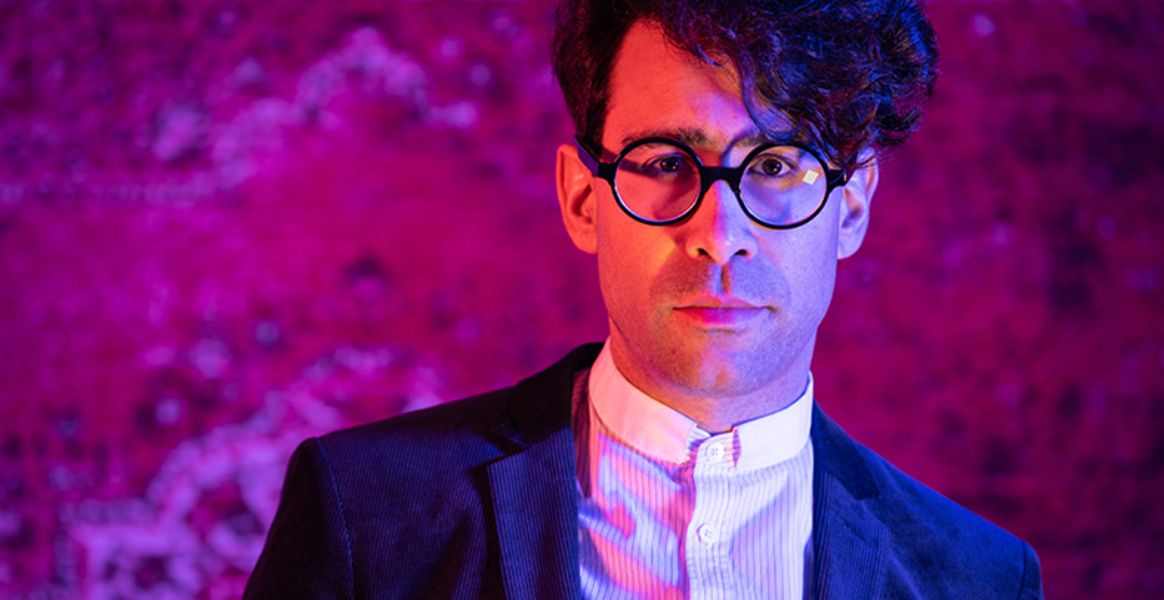
18 years after their beginnings in the old town of Biel, Pegasus are reinventing themselves - and presenting their hits with acoustic arrangements. Now on their new album "Unplugged" - and in May at a concert in Zurich's Hallenstadion. A conversation with bandleader Noah Veraguth.
event.: Noah, how did the corona period affect you, did you have to cancel many concerts?
Noah Veraguth: Fortunately, we weren't slowed down from a hundred to zero, because we had already reduced our gigs somewhat in recent years. Before that, in the eight years up to 2019, we were not only on the road in Switzerland, but throughout Europe and also in Asia. And yet, of course, this crisis is also directly affecting us as a band. But the situation is tougher for many of the people we work with. After all, the industry is all about love for the cause, the music, the event and the audience. Most of them haven't built up any big reserves and live from gig to gig.
With the Hallenstadion concert, you are now taking a step forward.
Yes, we have to be able to carry on and do our job. That's a statement, of course. But safety must be guaranteed. We want people to stay safe and healthy, that's the main thing.
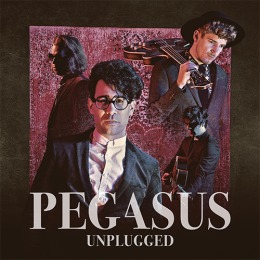
ALBUM "UNPLUGGED" STRAIGHT TO NUMBER 1
Only released on January 15, the Pegasus album "Unplugged" immediately climbed to number 1 in the Swiss charts. The band calls it their "musical autobiography": all of their hits, such as "Metropolitans", "I Take It All" and "Skyline", can be heard on the album as acoustic versions, completely rearranged and without the use of full-bodied studio sounds. In addition to the two new singles "Victoria Line" with Anna Rossinelli and "Better Man", there is also another new song.
Your "Unplugged" album was released two weeks ago. Did this come about as a result of the corona situation?
We already had the idea for an unplugged album beforehand. Originally we wanted to realize it differently, also with recordings at live concerts. Now we've finished it completely in the studio. And this will be the first time people will hear us live in this way in the Hallenstadion.
So people will get to know you in a new way?
I think up to now we've been perceived as a band that produces very well-produced pop songs on an electronic basis. What many people don't know: In our early days, we were a very folky band. Back then, we simply played in the pubs in Biel's old town, went around with a hat and played double bass, two guitars and a tambourine. That's how we spent our weekends. Now our guitarist Simon Spahr is back with us. This is the moment for us to summarize what we've been doing all these years. We wanted to make something that was a bit more mature, more grown-up and more detailed. Presenting our best-known songs in this new guise and with new arrangements is the right step for us.
Was the unplugged project a reason or an argument for Simon's return?
We had already started without him. The reason was more that we all missed making music together. And of course it fits perfectly because our new sound
is very guitar-heavy.
So now you play unplugged, unfiltered, acoustic. What's that like for you?
It brings us much closer together again. Because we are actually a very organic band. We've grown bigger and bigger with our productions over the years. And we had perhaps overplayed ourselves a bit in recent years. We wanted to do something again that was very small, very intimate. Very close. So that you have the feeling that we are really in the room with the audience, playing something to them. The album reflects our entire oeuvre in a very personal and intimate way. It's very finely played, you can hear the finesse of every instrument. It gives you the feeling that you are in the same room as the band.
Will you also be able to create this intimacy in the Hallenstadion, Switzerland's largest concert hall, in front of 4500 people? Isn't that a contradiction?
Unusual times call for unusual projects: For example, the Hallenstadion is the ideal venue for an unplugged concert during the pandemic: you have to have a protection concept and keep your distance. We have enough space for this in the Hallenstadion. At an unplugged concert, you sit, listen and don't move around much. It's more music-oriented, more like listening than participating.
Nevertheless, aren't the dimensions and the distance between the stage and the audience simply too big in the Hallenstadion?
No, it won't simply be small like in a bistro. We will be playing acoustically, but in an extended formation. In dimensions that you would expect at an Hallenstadion concert. With six or seven additional musicians, strings and horns. And we have a broad visual concept. Anyone sitting in such a large hall also wants to be offered something visually. The stage will be in the middle of the room, so it will be a special evening.
Are there any other surprises planned? Special guests?
Of course I can't tell you now. But of course, let us surprise you!
You've been traveling internationally in recent years, you've lived in London and Berlin. What draws you back to Switzerland anyway - isn't it more interesting abroad and also more professional in the music sector?
The Swiss music industry is no less professional than the German or English one. In England, however, the acceptance of pop music as we make it is much greater. Radio-friendly songs written for the masses are a supreme discipline in England. Songs with which you want to reach as many people as possible, with every note and every line. That's what I like about the English mentality, and that's why I always enjoy being there.
Is pop not held up high enough in Switzerland?
Pop is much more widely accepted here today than it was ten years ago, when people still turned up their noses when someone came along with a clean pop song. Even when we started out, we played 3-minute pop songs, other bands were much more experimental. We were total outsiders and we felt it.
Do you want to be taken seriously as pop musicians and artists, do you want to make a difference or do you simply see yourselves as entertainers?
I definitely see myself as an entertainer. When people come to our concert
, I want them to have the time of their lives for a few minutes or two hours. They should digress, enjoy and be touched. A good song is like a good movie.
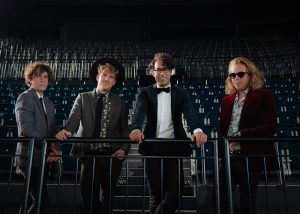
PEGASUS: BACK TO FOUR
Simon Spahr (31, guitar, left) returned to Gabriel Spahni (31, bass, vocals), Noah Veraguth (33, lead vocals, piano, guitar) and Stefan Brønner (31, drums). Five successful studio albums that have gone gold and platinum, four Swiss Music Awards, successful tours at home and abroad: the four Biel residents of Pegasus have been the big stars of the Swiss pop scene in recent years.
When is a song good?
When it simply grabs you without you having to think long and hard about whether you like the melody
or the lyrics.
Which is your best song?
There are two or three candidates. One of our new songs, "Victoria Line", has what it takes to play
right at the top. Although the song is based on its lyrics, it has hundreds of nuances that make it special and underline the lyrics. Anna Rossinelli's wonderful voice was a perfect match. Also the arrangement and certain frequencies. In all modesty, the song is very clever. Lisa Oribasi co-wrote it and gave it a certain twist - she's a young Swiss musician from Fribourg, but the song was written in London. Like "Metropolitans", this song is interesting in terms of content and also has a special arrangement.
Your trademark is the bow tie. Is there somethingspecial about it?
It came out of sheer necessity at the beginning. Because we didn't have a look. We simply appeared in suits, the others with a tie and I with a bow tie. That's how it became established. But for "Unplugged" we're also cutting back on the outfit: I'm deliberately not going to wear a bow tie in the Hallenstadion. Let's see if people can survive that (laughs).